


Exploring Yoshiwara: Tokyo's Historic Wild Side
Walk through Yoshiwara, Tokyo's former pleasure quarter, where Edo-era history still echoes.
Overview
Foreign visitors to Tokyo almost universally know Asakusa, and can usually point to it on a map. Yet ask where Yoshiwara is, and few can answer beyond "somewhere past Asakusa." The films Yoshiwara enjo and Sakuran portrayed the original Yoshiwara, then sited near Ningyocho. That quarter burned down in the Great Fire of Meireki of 1657, after which the district was relocated to its present site.
Yoshiwara is Japan's most storied red-light district, and its Edo-era atmosphere still evokes vivid impressions of what the quarter once was. Although no longer the boisterous showcase of the past, it remains a tourist destination of unrivaled cultural pedigree, where the fashion, Kabuki, and popular culture of the day once flourished. The district has inspired countless novels and films set within its lantern-lit streets.
This is a walking tour covering Sanya and the Yoshiwara area, from Minami-Senju Station to Asakusa Station. Beyond the remnants of Yoshiwara's pleasure-quarter past, you will visit distinctive stores and flop-houses with more than a century of history. Every corner here carries personality, and the route includes artistic spots barely known even to Japanese travelers well versed in Tokyo's deep history, culture, and food. This experience is recommended above all for repeat visitors to Japan.
Details
❖ Meet at JR Minami-senju Station
15:00
Your guide will meet you at the JR Minami-senju Station ticket gate at 3:00 pm. From here we set off on a three-hour walking journey through Sanya and Yoshiwara, two of Tokyo's least-visited yet most historically layered neighbourhoods.
❖ Ekoin Temple & Kozukappara Execution Grounds
15:05 - 15:30 (25 min)

Our first stop is Ekoin Temple, a Buddhist site with a sombre history. It served as the final resting place for those executed at the adjacent Kozukappara Execution Grounds, one of the three principal execution sites of the Edo period. It is estimated that more than 200,000 people, including criminals and political dissidents, were buried here.

❖ Enmeiji Temple & Kubikiri Jizo
15:35 - 15:50 (15 min)

A short walk brings us to Enmeiji Temple, home to the Kubikiri Jizo ("Neck-Chopping Guardian"), a large stone statue erected in 1741 to offer spiritual comfort to the souls of those executed at Kozukappara. The figure's name reflects its location directly beside the execution site. Standing over three metres tall, the statue holds a haunting yet peaceful presence. For history enthusiasts, the spot is doubly significant: it sits near where the first anatomical dissections in Japan were performed, marking the dawn of modern Japanese medicine.
❖ Tamahime Inari Shrine
15:55 - 16:10 (15 min)

Continuing through the backstreets we arrive at Tamahime Inari Shrine, a distinctive spiritual spot woven into the community life of Sanya. While it follows the traditional Inari form, dedicated to the deity of harvest and prosperity, it is best known for the "Shoes Fair" held here twice a year. The fair reflects the neighbourhood's history as a centre of leather crafting and shoe manufacturing. The shrine's atmosphere is authentic and unpretentious, a glimpse into the daily life of shitamachi (old downtown) Tokyo that most travellers never see.
❖ Inariya, the Sanya Flophouse
16:15 - 16:25 (10 min)
Inariya is an iconic doya (flop-house) of the Sanya district, known among locals as the "Ghibli House" for its extraordinary exterior, completely engulfed in thick, untamed ivy. For a staggering 1,700 yen per night, it offers a raw glimpse into the authentic life of Sanya's workers. The wooden interior is divided into cramped, three-tatami-mat rooms resembling a rustic capsule hotel, with no air conditioning and only the most basic necessities. While unmistakably modest, it remains a rare living monument to the grit and history of old Tokyo's underbelly. The tour passes the exterior; it is a must-see for travellers seeking the city's most unconventional cultural layers.
❖ Iroha Shopping Arcade & Tomorrow's Joe Statue
16:30 - 16:50 (20 min)

The Iroha Shopping Arcade is a nostalgic, retro shotengai that feels like a time capsule from the mid-twentieth century. Its claim to fame is its deep connection to the legendary boxing manga Ashita no Joe ("Tomorrow's Joe"), set in this very neighbourhood. A life-sized statue of Joe Yabuki stands as a symbol of the area's gritty determination. Walking through the arcade lets you feel the atmosphere of the high-growth postwar era, blending pop culture history with local community character.
❖ Yoshiwara Area Walkabout
16:55 - 17:25 (30 min)
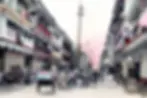
Exploring the heart of the former Yoshiwara district reveals hidden architectural and historical gems. We begin at Mikaeri-yanagi (the "Looking-back Willow"), where patrons would hesitantly glance back at the quarter before leaving. Nearby you can still see remnants of the Ohaguro-dobu, the black-water moat that once enclosed the district, marked today by historic stone walls.

❖ Yoshiwara Shrine
17:30 - 17:45 (15 min)

Yoshiwara Shrine is a consolidation of several smaller shrines that once stood within the pleasure quarter. Historically it was a place where the Oiran (high-ranking courtesans) and other women of the district came to pray for beauty, art, and business success.

❖ Yoshiwara Benzaiten
17:45 - 17:55 (10 min)

Adjacent to the shrine, the Yoshiwara Benzaiten is a striking site dedicated to the goddess of water, music, and art. It is famous for a vivid, large-scale mural and its association with the Great Kanto Earthquake of 1923; a pond on the grounds served as a tragic refuge for many during the fires that followed.

❖ Asakusa Naniwa
17:55 - 18:00 (5 min)

Asakusa Naniwa is a legendary taiyaki (fish-shaped cake filled with red bean paste) shop that has reached cult status among Tokyo foodies. Known for its "natural" baking method, in which each cake is baked individually in a heavy iron mold, it produces a thin, crispy shell and a rich, flavourful filling. The shop's devotion to traditional craftsmanship mirrors the artisan culture of the surrounding districts. A hot taiyaki here is the perfect way to close a long walk, offering a sweet taste of Asakusa's enduring culinary heritage.
❖ Conclude at Tsukuba Express Asakusa Station
18:00
The tour concludes at the Tsukuba Express Asakusa Station, from which you can easily continue your evening into greater Asakusa or return to your hotel by metro.
OPTIONS
Notes
Only adults aged 18 and over may join this tour.
Photography is prohibited at certain points along the route; please follow your guide's instructions.
Please wear comfortable walking shoes for the three-hour walk.
Tour duration can be extended at 8,000 yen per group, per hour (10,000 yen per hour during high season).
Meeting Point
Departure point: JR Minami-senju station
4 Chome Minamisenju, Arakawa City, Tokyo 116-0003, Japan
Finish point: Tsukuba Express Asakusa Station
What's included:
Professional English-speaking guide
Photos of tour participants
Local tax
What's not included:
Food and drinks
Hotel pick-up (available as optional add-on, ¥8,000 per group)
Free cancellation up to 8 days before the experience starts (local time)
Private experience
1
-
6
Participants
Tokyo
From ¥11,000 /person
3 hours
Traveler Photos


From ¥11,000 /person
3 hours
Tokyo